
For the project Populism and Conspiracy (PopCon), please see the page on Fundend Research here or see the project webpage here
Ongoing: Two New Surveys on the U.S. — Austria Relationship funded by the Botstiber Foundations

- Results from a new survey focusing on Austria and the United States show changing attitudes about how the citizens of each country perceive the other. The survey is the first since the 1980s to poll perspectives of the relationship held by citizens of both countries.
- As generational change, global political developments, and new media reshape how Americans and Austrians see one another, this survey is a snapshot of the present and a roadmap for strengthening our mutual relationship for the challenges that lie ahead
- The surveys conducted in early 2025 were generously funded by the Botstiber Foundations.
- For executive summaries see here: Austria Survey | US Survey
FINDINGS — for the Study on the survey of Austrians see here; for the survey of Americans see here!
NEW: TO WHAT EXTENT IS JAVIER MILEI A FIGURE INTEGRATING THE TRANSNATIONAL FAR RIGHT AND MAINSTREAM CONSERVATIVES — Analyzing his discourse in office
Completed: IS JAVIER MILEI A POPULIST?

Study: Title: Libertarian Populism? Making Sense of Javier Milei’s Political Discourse: Check out our published study HERE!
with co-authors: Gracia Landaeta, Oscar–, Laguna Tapia, Andrés, Muriel Quintanilla, Claudia all Universidad Privada Boliviana
Although perceived by many as a populist, Milei is unusual in that he sees himself as a liberal libertarian and defender of the West against collectivist policies. To this end, speeches and social media posts from the relevant period are examined and analyzed in terms of ideational populism, populist discursive framing, populism as strategy, and populism as crisis performance. The analysis confirms that Milei is at best a partial populist, as he fails to define the core populist concept of the „people“. It concludes that the performative turn seems to be the most useful theoretical framework to explain key aspects of Milei’s discourse. Performing the crisis helped Milei justify the need for radical change and communicate the need for an anti-politician and outsider untainted by established political fronts.

ONGOING: WHO ARE THE QUERDENKERS?
From Pandemic Protest to Political Persistence: The Transformation of the Querdenken COVID-19 Movement with Amélie Apke and Fabian Habersack
This project examines the ideological evolution and strategic realignment of the Querdenken movement, a case study emblematic of protest movements facing the decline of their core issue. Originating in Germany and Austria in response to measures aimed to contain the COVID-19 pandemic, Querdenken (‘Lateral Thinking’) presents a compelling case for analyzing the post-crisis evolution of protest movements as it has proven surprisingly resilient to changes in issue salience. Empirically, we examine Querdenken’s ideology and strategies, primarily through its weekly magazine Demokratischer Widerstand (‘Democratic Resistance’), which the movement has been publishing continuously since its emergence in April 2020. Employing both qualitative and quantitative content analyses, we investigate the movement’s strategies in adapting to changes in issue saliencies following the decline of its core issue. We outline three theoretical pathways for populist movements facing such a challenge: (a) issue diversification , whereby the movement expands its ideological scope and substitutes some of its previous issues and positions, (b) ideological transformation , wherein a movement seeks to maintain its crisis-focus yet attempts to reframe the crisis through its turn to new socio-political issues to ensure engagement and continued relevance, and (c) political consolidation , which has a movement adhere closely to its core agenda but involves adopting more structured, party-like forms of organization and shifting focus to a different arena. Investigating these respective strategies empirically, this study contributes to the discourse on the adaptability of populist movements in post-crisis scenarios. The Querdenken movement thus serves as a paradigmatic example of how populist movements can evolve beyond their initial impetus, presenting new challenges and opportunities for democratic engagement and policy response.

ONGOING: INVESTIGATING CONSPIRACY MENTALITY
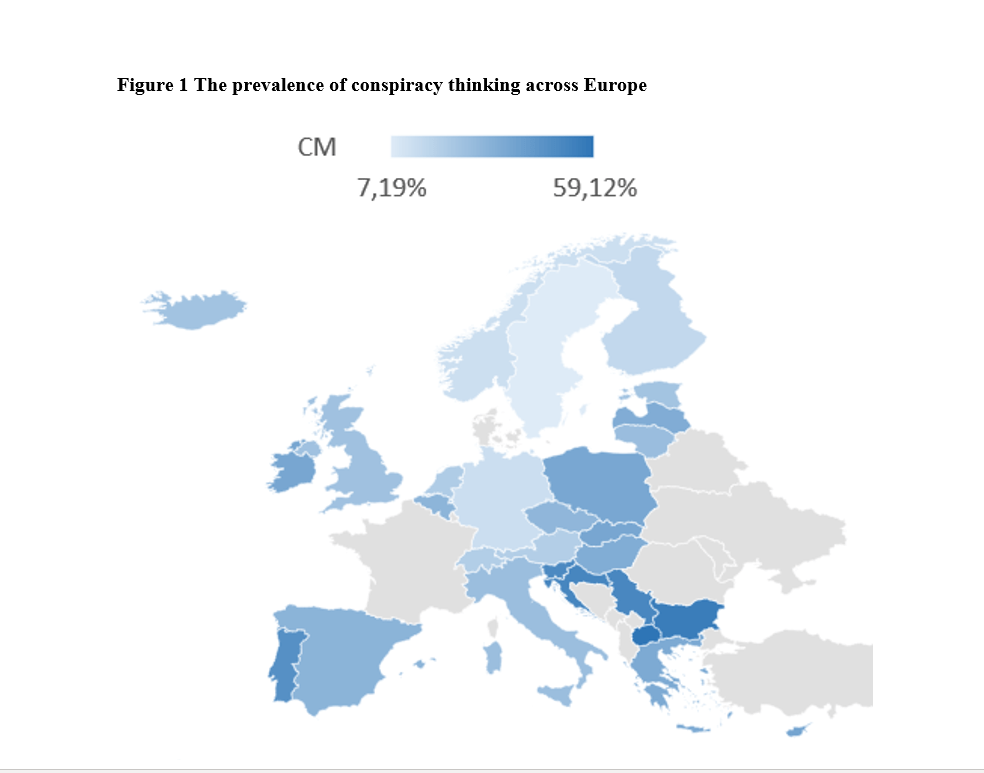
A) To what extent do individual and contextual factors contribute to the conspiracy mentality of citizen in the 23European countries? B) To what extent do political orientations exercise causal influence relative to other factors
We gratefully acknowledge funding provided for this research by the Swiss National Science Fund (SNSF) and the Austrian Science Fund (FWF) with the project designation FWF-I 6035-G

ONGOING:
INFECTED POLITICS — HOW DID POPULISTS IN THE AMERICAS AND EUROPE DEAL WITH THE COVID-19 PANDEMIC?
The nature of the Covid-19 pandemic virtually invited populist actors to resist the status quo and promote other forms of knowledge. Latin America, North America, and Europe are considered fertile ground for many different types of populism. During the pandemic, political leaders on both continents promoted "medical populism" as an effective containment measure. Populists often use medical populism as a means to oversimplify or dramatize the pandemic, create division, and distort scientific evidence. Medical populism appears to be particularly effective when actors discursively trigger and create new crises caused by "the system" and its political and scientific representatives.

Evidence suggests that the effects of this type of decision-making in the political arena affect the lives and livelihoods of voters, especially in moments of crisis when extraordinary measures are justified and quickly implemented. This project examines, for the first time in a cross-national comparison, the relationship between populism and "supply-side" scientific and medical beliefs in the context of a global pandemic, where the political responses of populist leaders to COVID-19 and medical measures are not yet well understood. The goal is to better understand the similarities and differences between populist political responses to the pandemic on both sides of the Atlantic.

Ongoing -- book contract with Palgrave


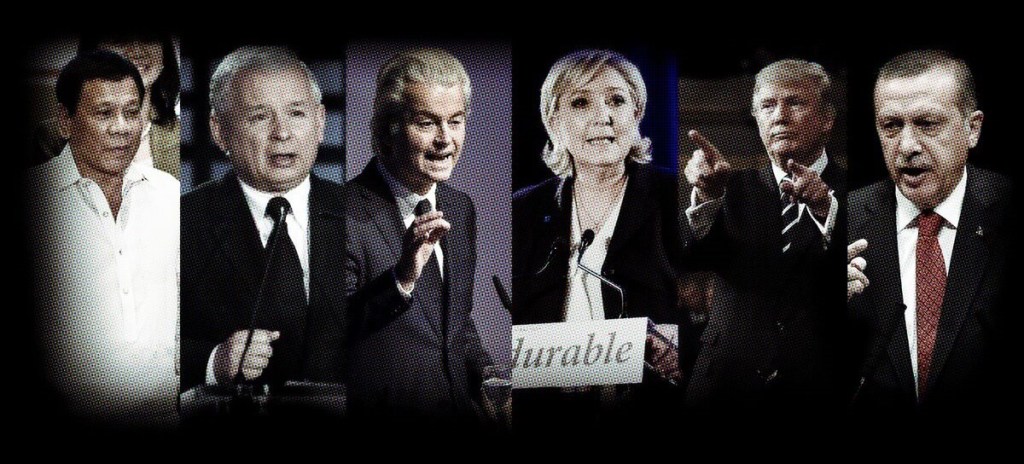

Completed: People and radical populists both complain about current democracy. But do they mean the same thing? Do they both favor the same alternatives? What do we know?
Challenging Democracy — Understanding How the Ideas of Populists and Disenchanted Citizens Align — See our Special Issue of Government and Politics


The research argues that we do not know enough about the extent to which ideas about representative party democracy and its alternatives, as expressed by disenchanted citizens and populists, converge. Citizens‘ potential preferences seem to range from stealth democracy, decision-making by apolitical experts, to deliberative mechanisms and referenda. The picture is equally blurred when it comes to the views of populist actors themselves, as research suggests that their calls for referendums diminish over time and that they reject deliberative bodies outright. This special issue reassesses our understanding of the extent to which populists‘ and citizens‘ ideas and the alternatives they propose coincide and argues for a wider dissemination of relevant research that explores these shortcomings. The articles presented here explore these points by presenting conceptually and/or methodologically innovative contributions that address issues such as the mismatch between populists and citizens in terms of democratic alternatives, (dis)satisfaction with populist parties in public office, the preferences of distinct subgroups such as women and the economically left behind, affective polarization, illiberalism, varying preferences for referendums, and the role of political emotions among populist parties and their supporters.
Completed: PROJECT: EXPLORING THE VOTER – PARTY LINK

- EXPLORING THE VOTER – PARTY LINK (ongoing): This work included hosting an ECPR- JOINT SESSIONS WORKSHOP 2021 — VIRTUAL016: New Frontiers in Democracy Research: Tackling a Conceptual and Methodological Impasse. FOR THE FULL WORKSHOP DESCRIPTION AND APPLICATION DETAILS, SEE HERE


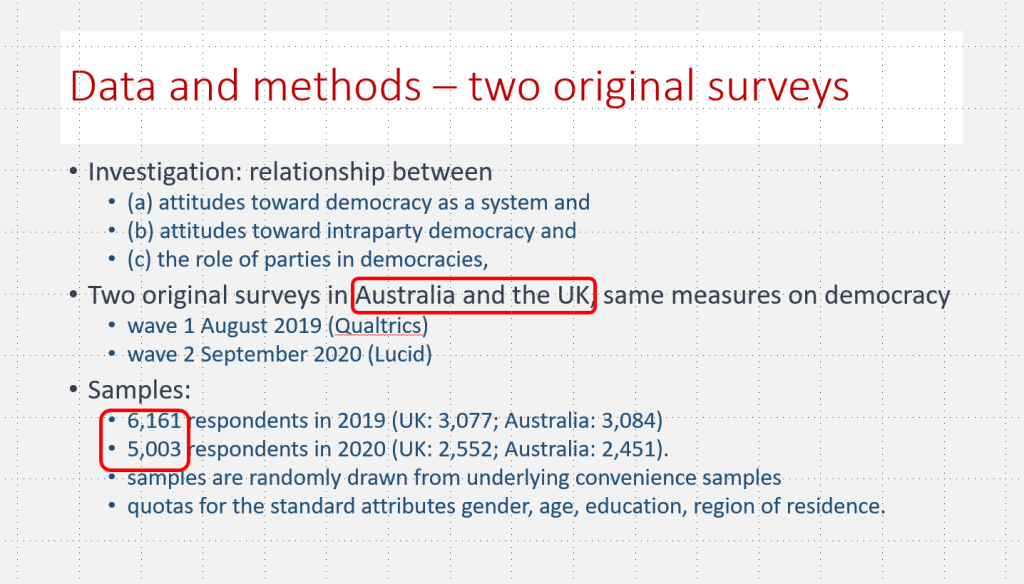
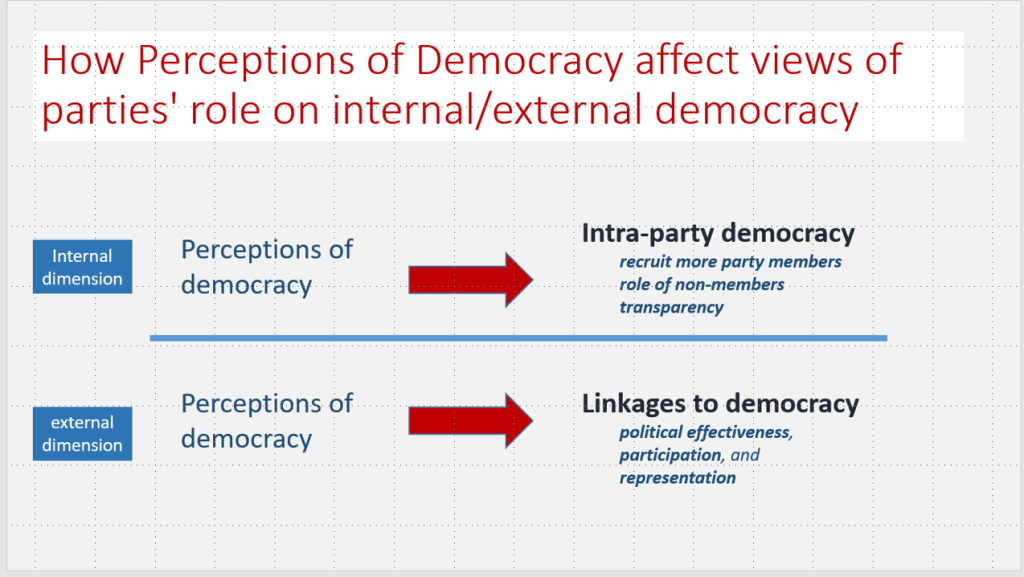


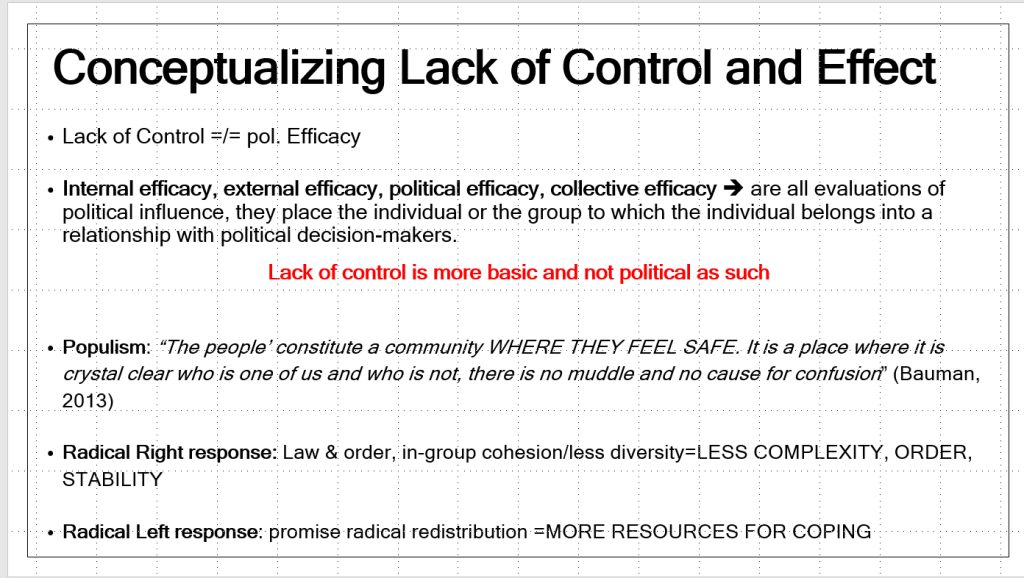
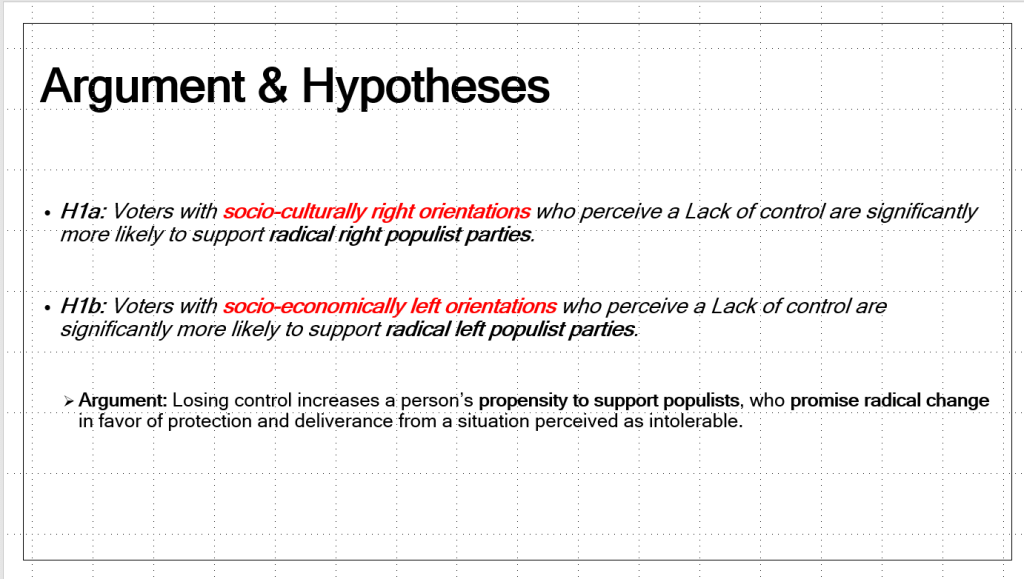
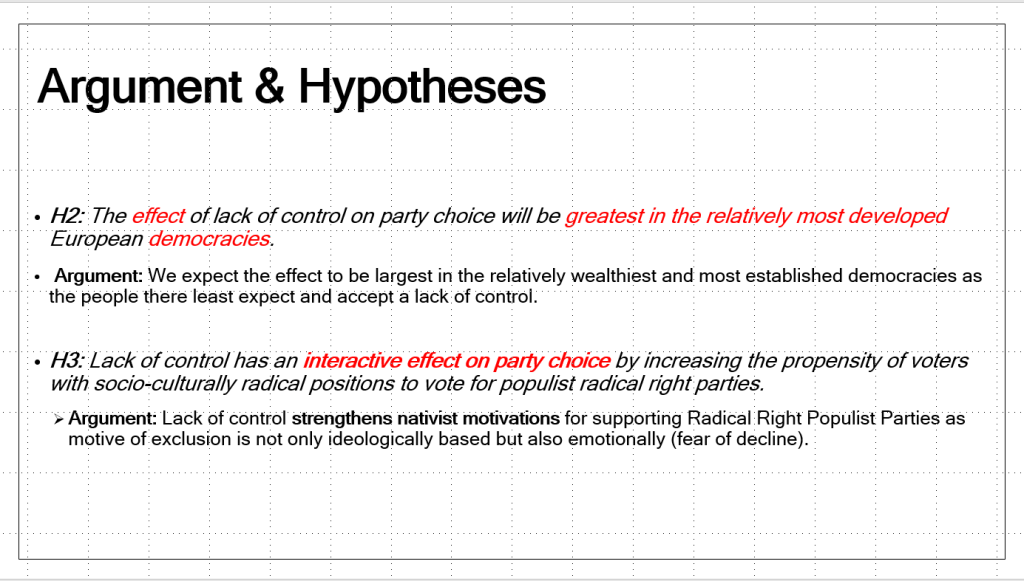
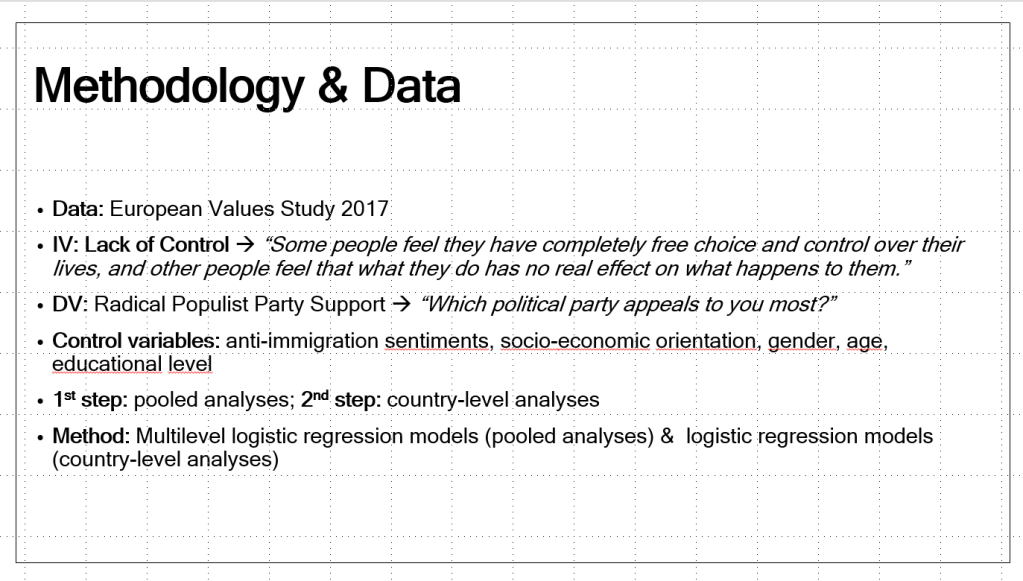
Completed: PROJECT: LOSING CONTROL-ANALYZING THE DEMAND SIDE OF POPULIST PARTY SUPPORT
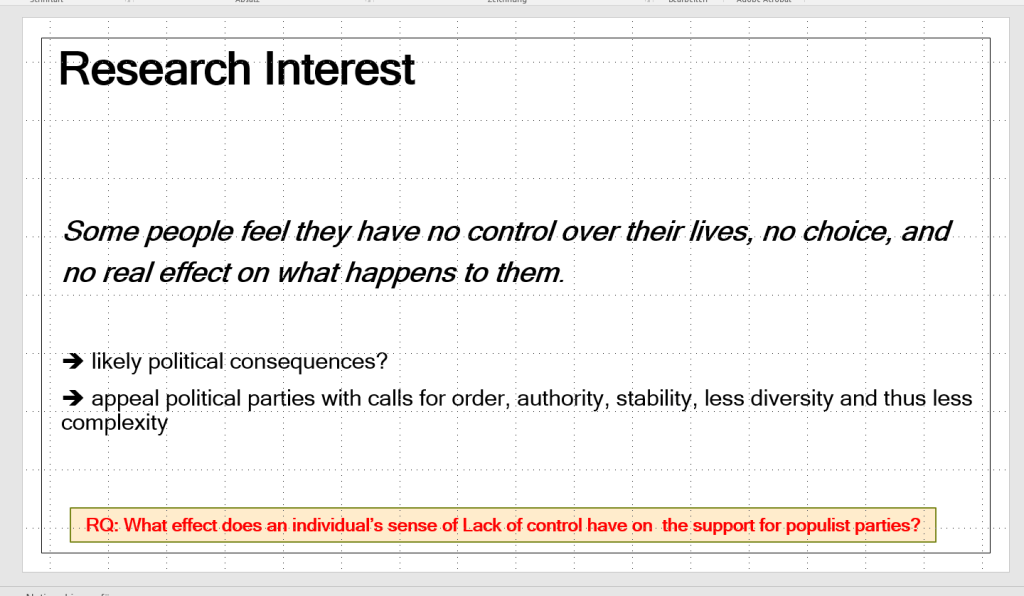
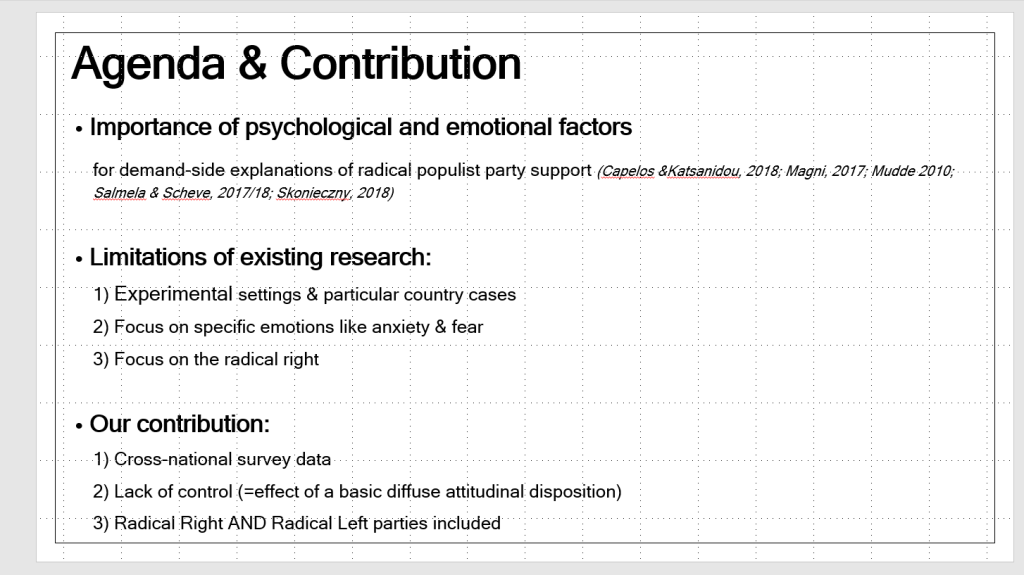
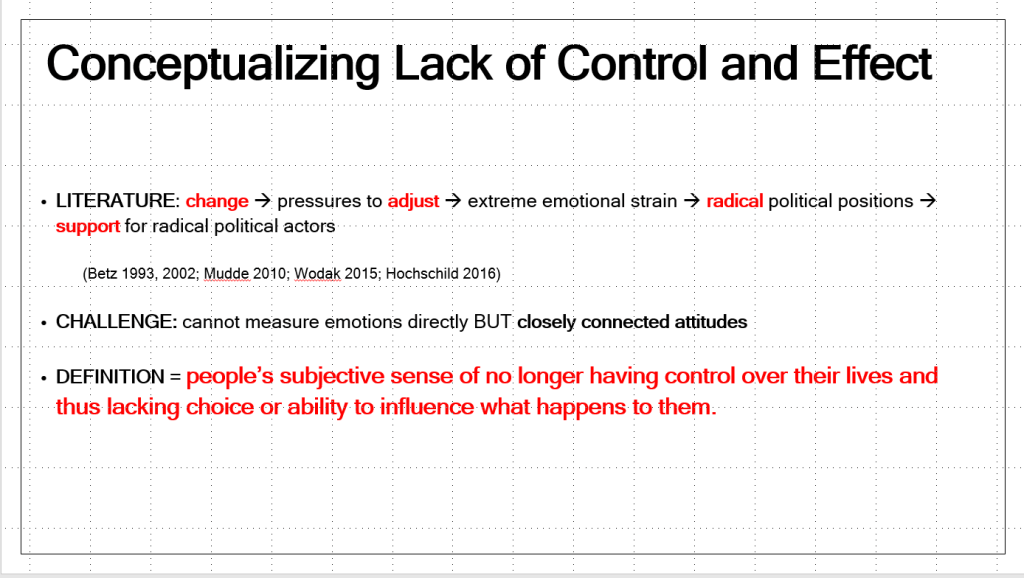
- LOSING CONTROL: ANALYZING THE DEMAND SIDE OF POPULIST PARTY SUPPORT –– RQ: What effect does an individual’s sense of loss of control have on the support for populist parties? Projekt with Viktoria Jansesberger


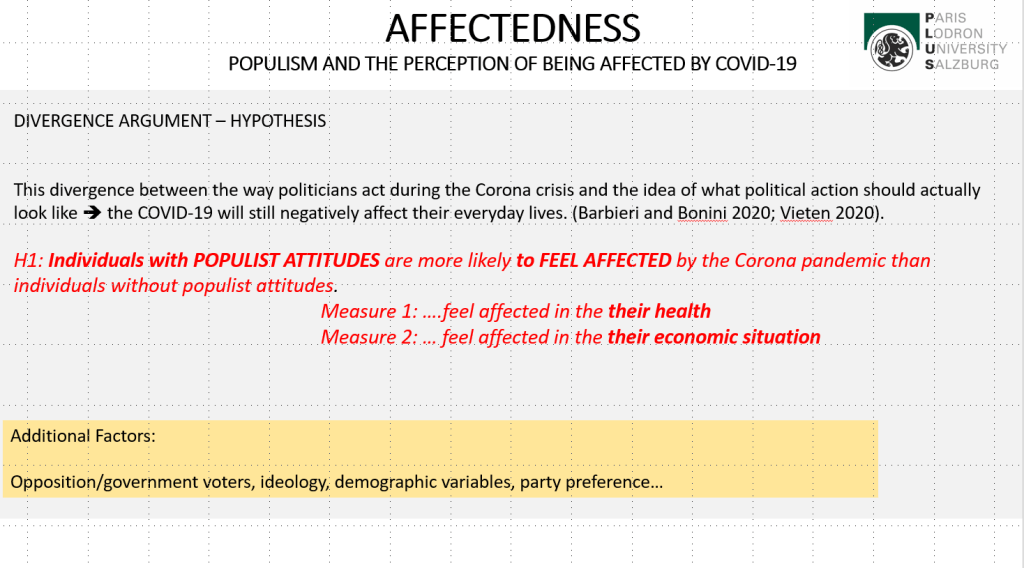
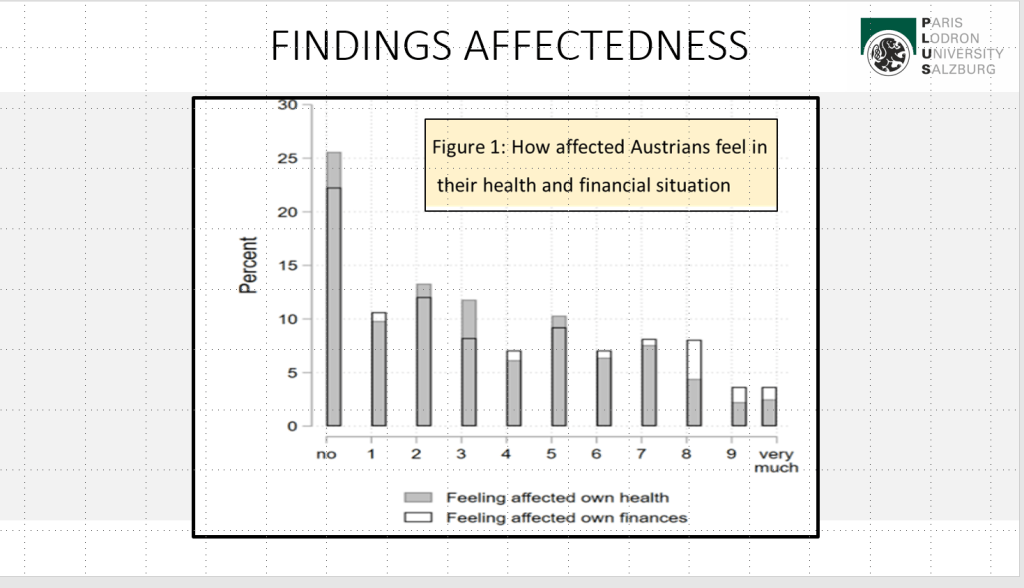
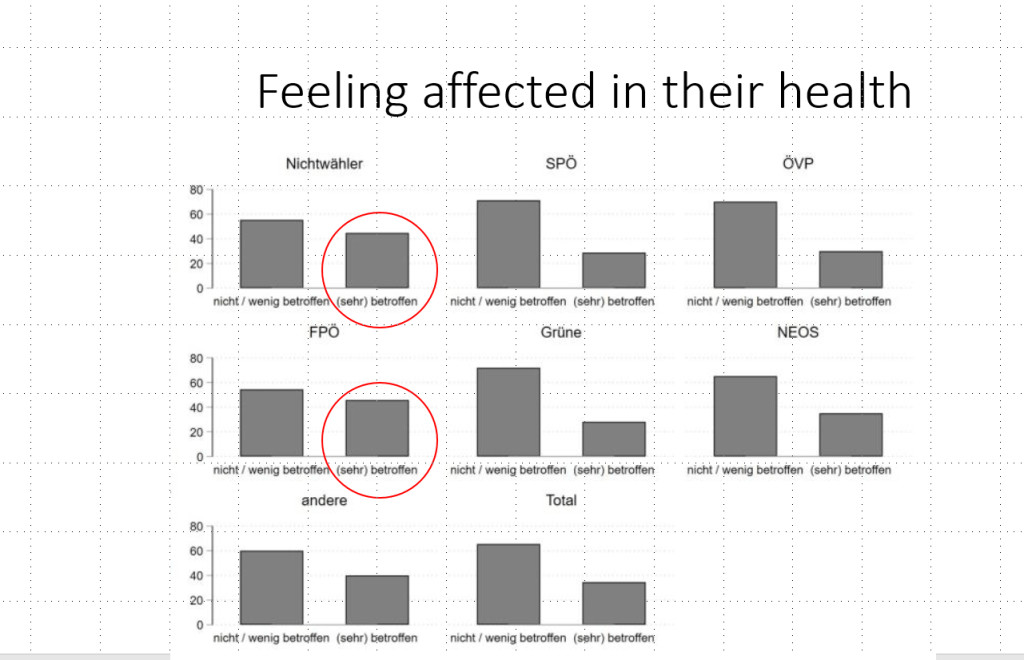
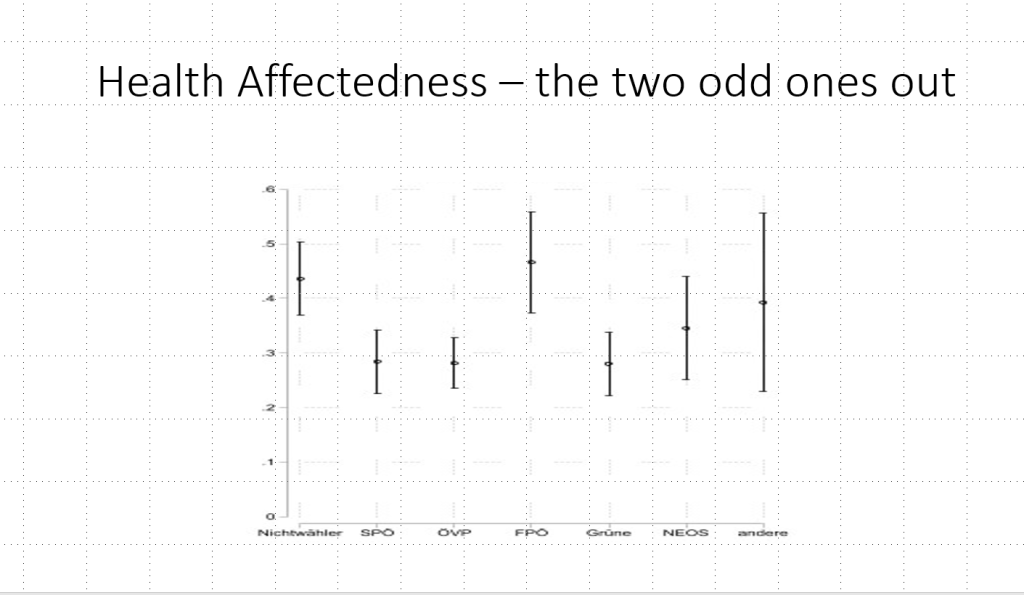
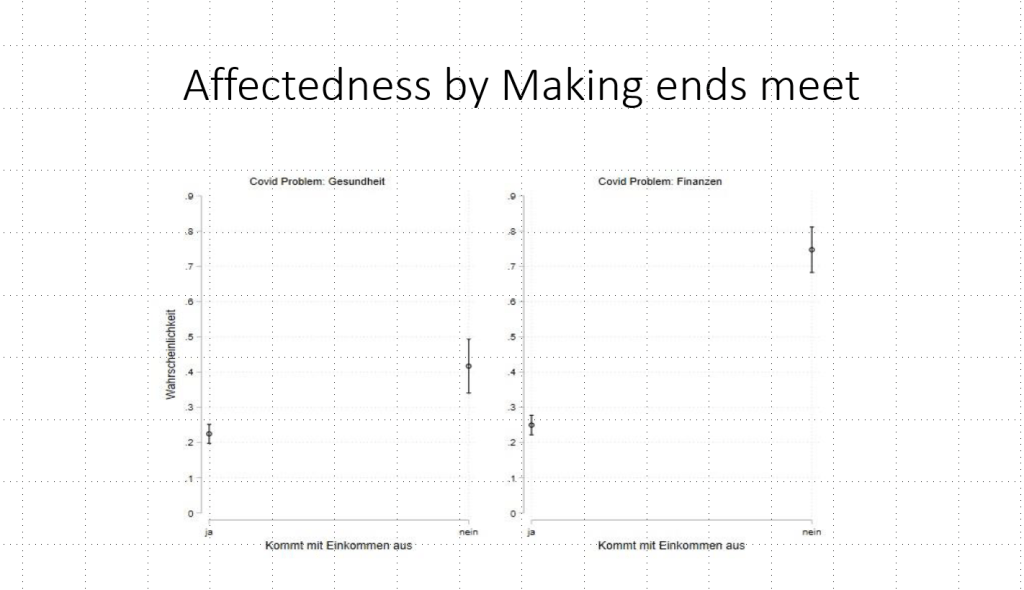
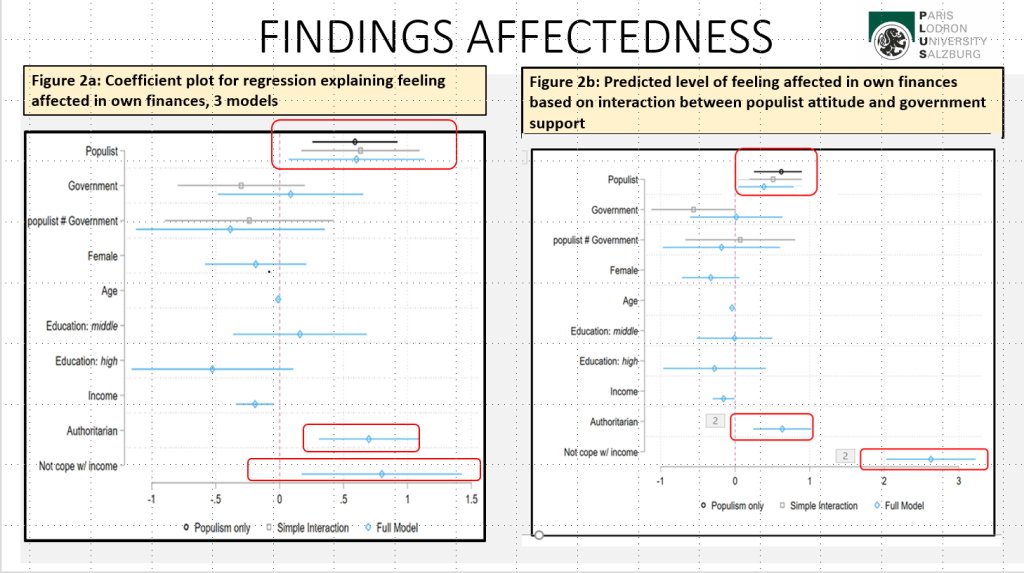
Completed: PROJECT: EXPLAINING THE RELATIONSHIP BETWEEN POPULISM, TRUST, IDEOLOGY AND FEELING AFFECTED BY THE PANDEMIC
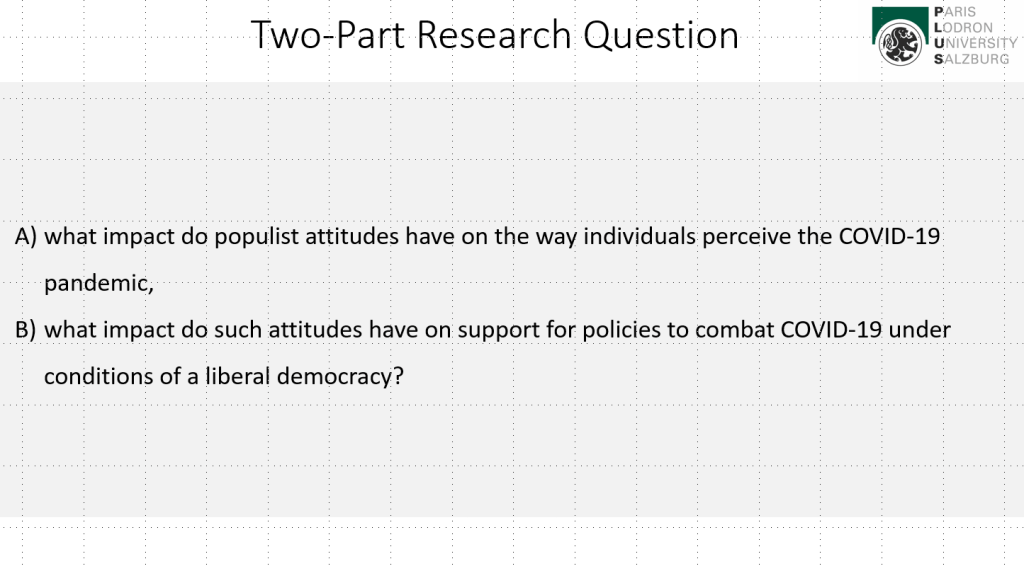
- EXPLAINING THE RELATIONSHIP BETWEEN POPULISM, TRUST, IDEOLOGY AND FEELING AFFECTED BY THE PANDEMIC: RQ: What impact do populist attitudes have on the way individuals perceive the COVID-19 pandemic,

Completed: PROJECT: POLITICAL ATTITUDES AND COVID-19
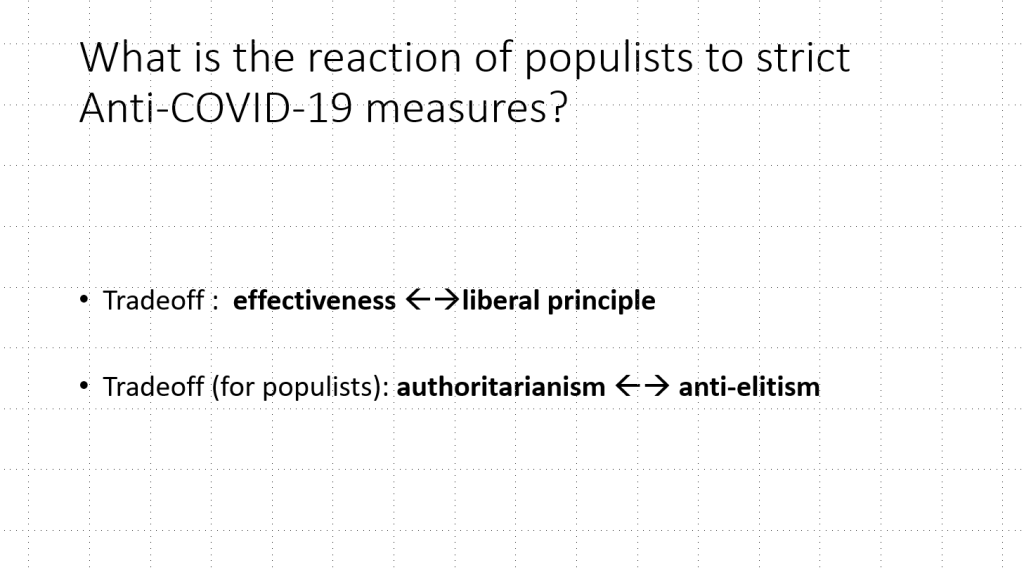
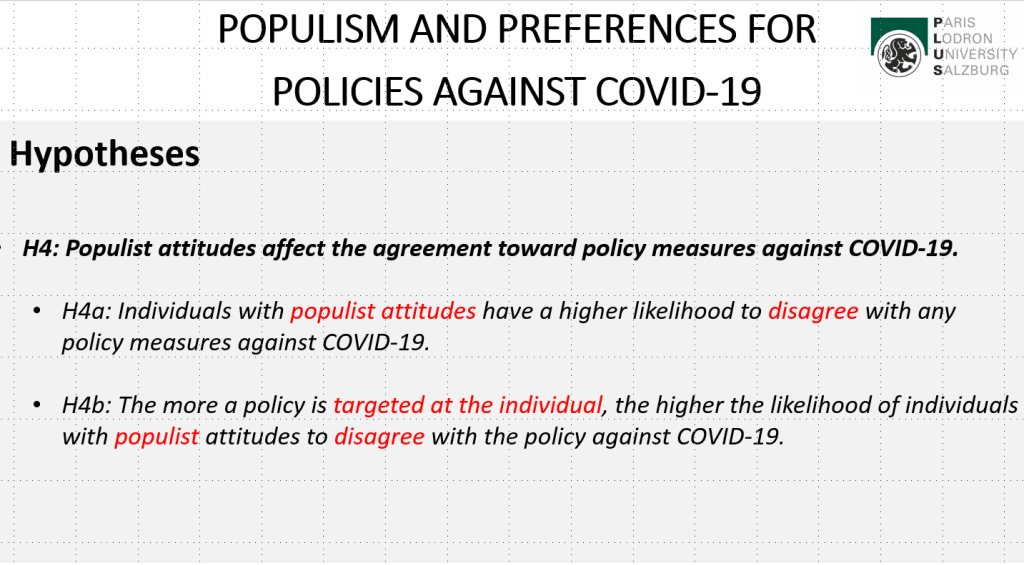
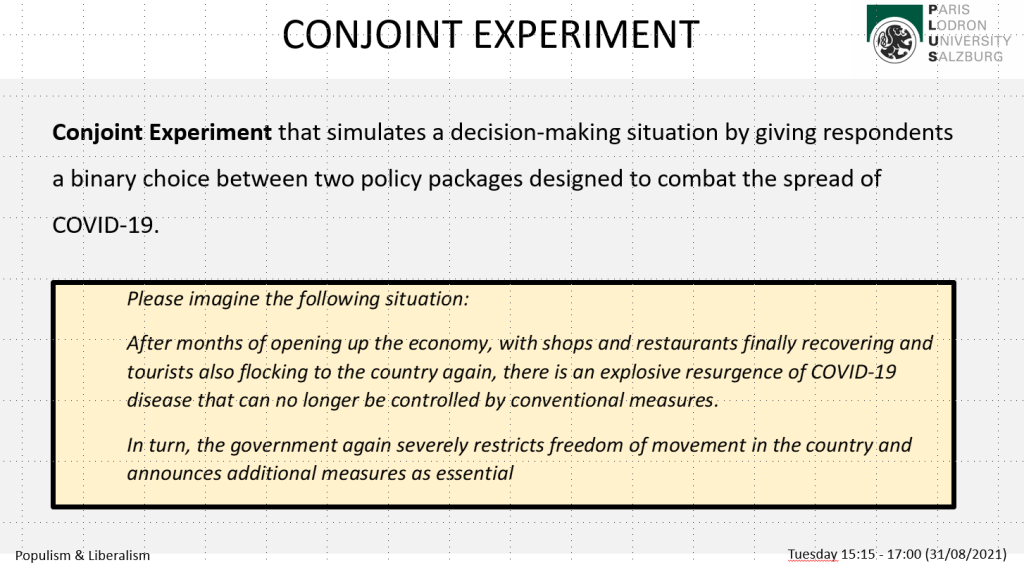
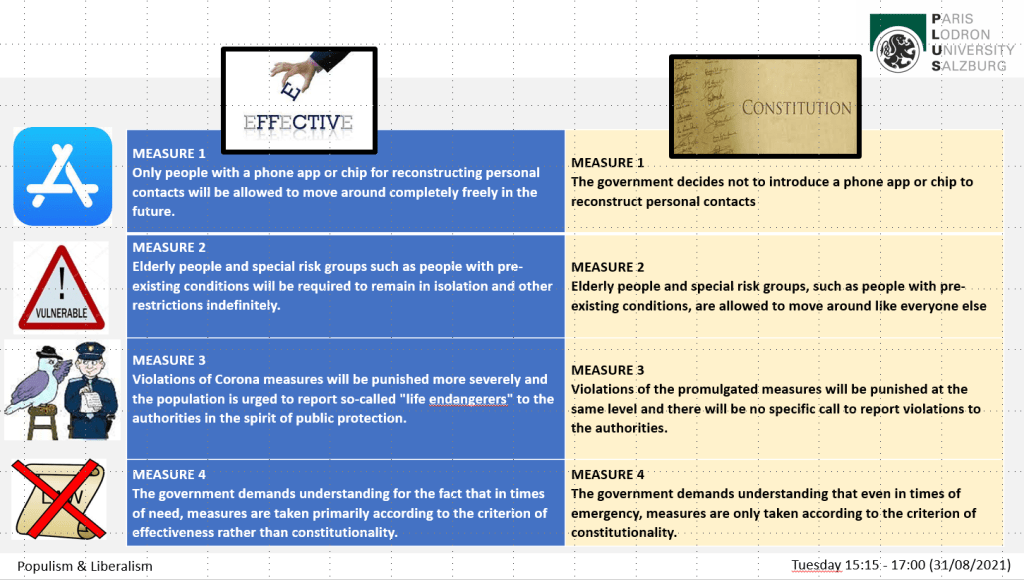
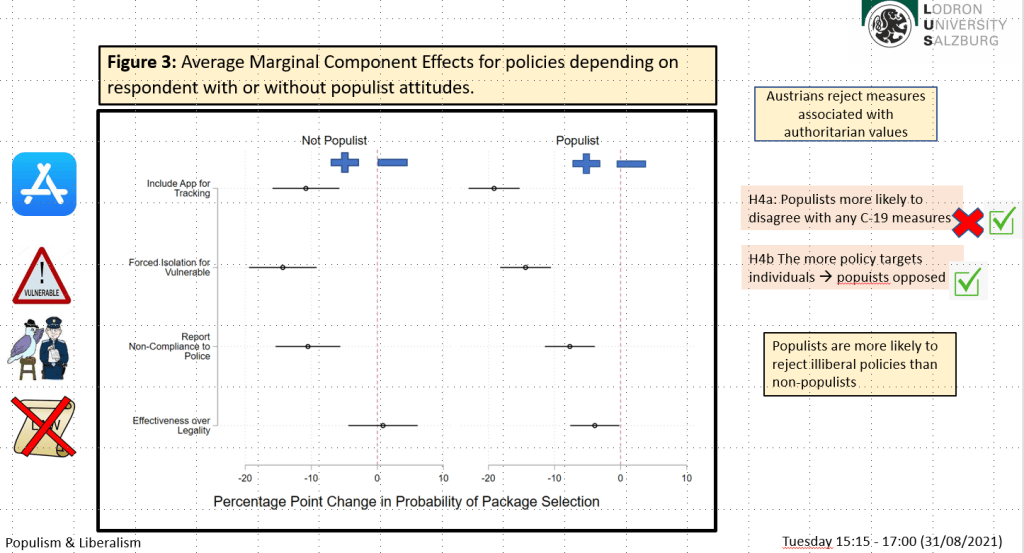
- POLITICAL REACTIONS TO EXISTENTIAL FEARS WITH COVID-19: Conjoint survey experiment with preceding vignette experiment. RQ: what impact do such attitudes have on support for policies to combat COVID-19 under conditions of a liberal democracy?


Completed: BOOK PROJECT
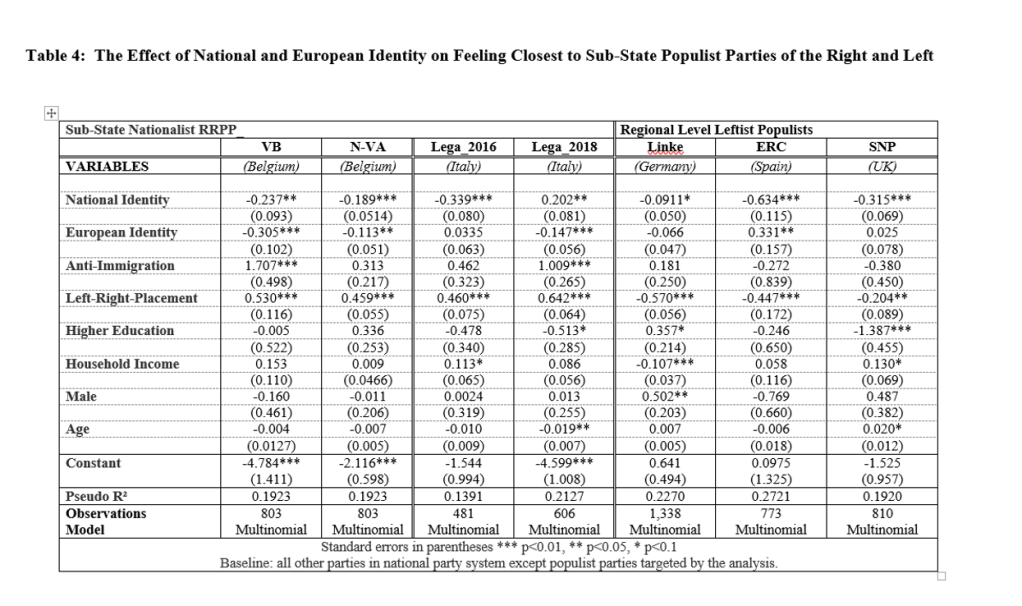
- Does Ethno-Territorial Identity Matter in Populist Party Support? Analyzing the Demand-Side of 20 National and Regional Populist Parties. Project with Viktoria Jansesberger
Completed: BOOK PROJECT
- Book publication: with Aneta Cektic and Klaudia Koxha — Diverse Voices on Populism – New Insights from the European “Periphery” (Nomos scheduled 2022)
Table of Content
- Introduction
- Political and historical causal analysis of Populism in Central and Eastern Europe – Daniel and Ruzha Smilov
- Populism in Countries of Democratic Transition: The Case of Armenia – Ruben Elamiryan
- Mapping populism in the European Post-Transition Periphery — Ashot Aleksanyan
- Populism in a never ending and multiple system transformation: the Kosovo case – Avdi Smajljaj
- Going in Cycles: Populist Discourses in Post-Soviet Georgia — David Matsaberidze
- In the political mainstream: Populism in Albania – Reinhard Heinisch, Klaudia Koxha
- Populism in Armenia: A Conceptual Framework and its application — Simon Clarke
- Political Parties and Leaders: Populism in Serbia — Despot Kovačević, Despot Kovačević,
- Populists in Government: The Case of Macedonia — Aneta Cekikj
- Populist Electorate Without Populist Parties: The Curious Case of Montenegro-Nemanja-Stankov

 Reinhard Heinisch